
A Guide to Cover Stocks for Booklets and Brochures
If you've ever stood in front of a paper swatch book wondering what the difference actually is between gloss, silk, and uncoated, you're not alone. Cover stock is one of those things that affects how a printed piece feels in someone's hands, and it's worth understanding before you place an order rather than after.
This guide runs through the standard cover options across our three main booklet formats, saddle-stitched, wiro bound, and perfect bound, plus our premium stocks, so you can pick something that best suits what you're printing.
The basics: what "cover stock" means
The cover stock is simply the paper used for the front and back of your booklet. It's usually heavier than the inner pages, both for durability and to give the booklet a bit of structure. Depending on the binding method, you'll have different weight ranges and finish options available, which is why the choice looks slightly different depending on which product you're ordering.
Saddle stitched booklets (8 to 64 pages, stapled through the fold) come with gloss, silk, and uncoated cover materials as standard.
- Gloss gives you a shiny, reflective finish. Colours look vibrant and it's a good all-rounder for anything that needs to catch the eye on a shelf or counter.
- Silk sits somewhere in between gloss and uncoated. It has a smooth surface with a slight sheen, less reflective than gloss, but still crisp for photography and colour work.
- Uncoated has no coating at all, so ink sits into the paper rather than sitting on top of it. Text tends to look slightly softer, and it's the natural choice if you're printing something that needs to feel more tactile or literary, like a report or a booklet with a lot of body copy.
You can also add matt, gloss, or soft touch lamination to the cover for extra protection or a different finish.
Wiro bound booklets (8 to 240 pages, bound with a spiral wire through punched holes) give you a slightly wider set of choices because the format is often used for things that get handled a lot: manuals, workbooks, recipe books, training materials.
Standard cover options here are gloss, silk, and uncoated, the same core trio as saddle stitched. Where wiro bound differs is the option to use Synaps, a tearproof, water resistant material at 300gsm. It's not for every project, but if you're printing something that's going to live in a kitchen, a workshop, or somewhere it might get wet or handled roughly, it's worth considering. Recipe books, menus and outdoor guides are the obvious use cases.
Lamination is available in soft touch, matt, and gloss, and we'd generally recommend it if your cover has heavy ink coverage, since it helps stop marking or transfer during transit.
Perfect bound booklets (40 to 400 pages, glued along a flat spine, the paperback-style finish) tend to be used for longer or more considered projects, catalogues, prospectuses, self-published novels, so the cover stock does a bit more work here in terms of setting the tone.
Standard options include gloss, silk, and uncoated, alongside soft touch, gloss, and matt lamination finishes if you want to add durability or change the feel.
The Premium Cover Stocks
Across all three formats, we also offer premium cover stocks for anyone wanting something a bit more distinctive than the standard range. These are uncoated, textured or finished papers rather than the usual coated options, and they change the feel of a cover quite noticeably.
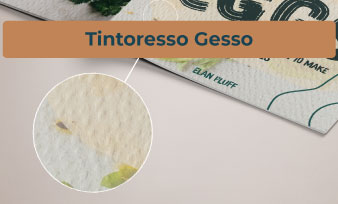
Tintoretto Gesso (250gsm) has a laid, fabric-like texture and a warm, off-white tone. It suits projects where you want the cover to feel considered rather than polished, art books, poetry collections, wedding stationery.
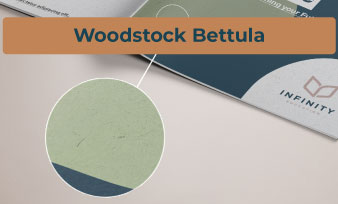
Woodstock Bettula (260gsm) has a soft, felt-like surface with visible fibre flecks, in a pale birch-toned white. It works well for anything with a natural or artisanal angle, packaging inserts, sustainable brand booklets, that sort of thing.
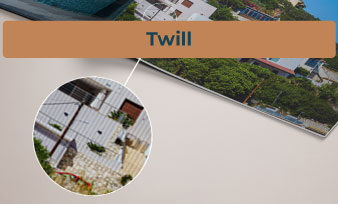
Twill (300gsm) has a fine woven texture that mimics fabric twill, the same weave you'd see in denim. It gives covers a tailored, slightly formal feel, good for business portfolios and luxury catalogues.
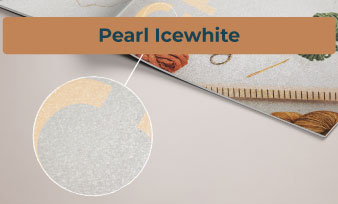
Pearl Icewhite (300gsm) is different from the other three in that it's about shine rather than texture. It has a soft pearlescent shimmer over a crisp white base, which suits wedding invitations, beauty and fashion catalogues, or anything wanting a touch of glamour.
A quick practical note: lamination is not available on the premium cover stocks as it isn't required for a wonderful finish.
Choosing between them
There's no single right answer, it depends on what your booklet needs to communicate before anyone's opened it. As a rough guide:
- Need something eye-catching and colour-heavy? Gloss.
- Need something crisp but a bit softer than gloss? Silk.
- Need something that feels literary or tactile? Uncoated.
- Need durability against water or wear? Synaps perfect for menus (wiro bound only).
- Want a premium, textured, or shimmer finish? One of the four premium stocks, chosen based on the tone you're after.